Learn the full neuroscience of trauma through 100 visual maps without wading through 1,500 pages.
Based on the work of: Van der Kolk, Levine, and Porges.
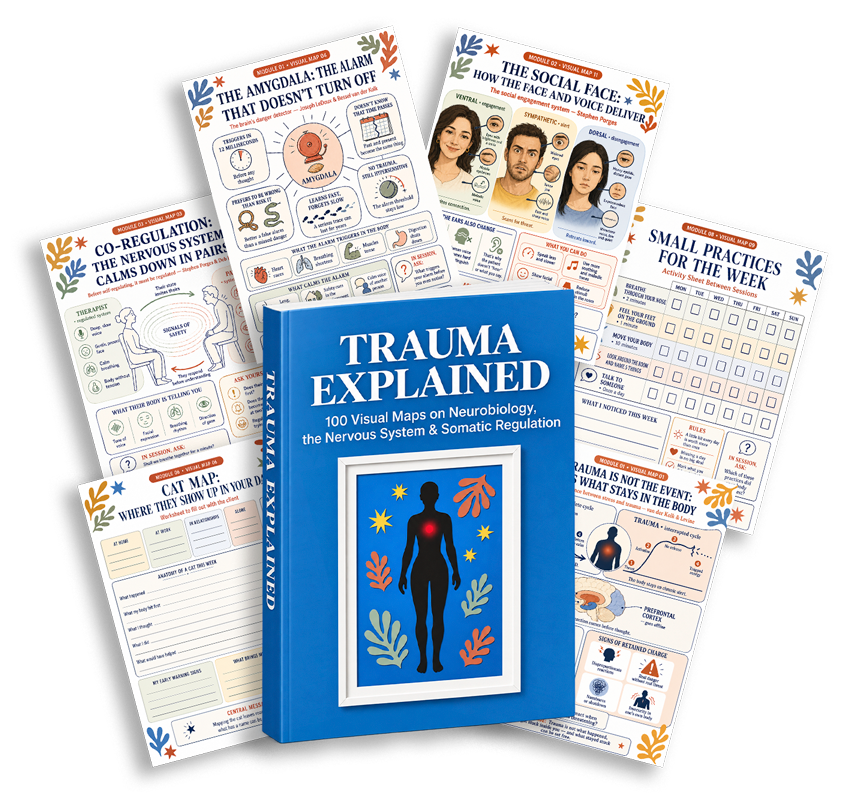
Here's what this material will do for your practice:
- ✓Hear a client say "Now it all makes sense" right in the session where you show them the map.
- ✓Never go blank again when a client dissociates, freezes, or falls apart right in front of you.
- ✓Become the go-to therapist for trauma with the neuroscience of Van der Kolk, Levine, and Porges at your fingertips.
- ✓Clients who understand their own bodies engage more and stay in the work with you.
- ✓So beautiful you'll want to send every client home with one.
See what's inside:
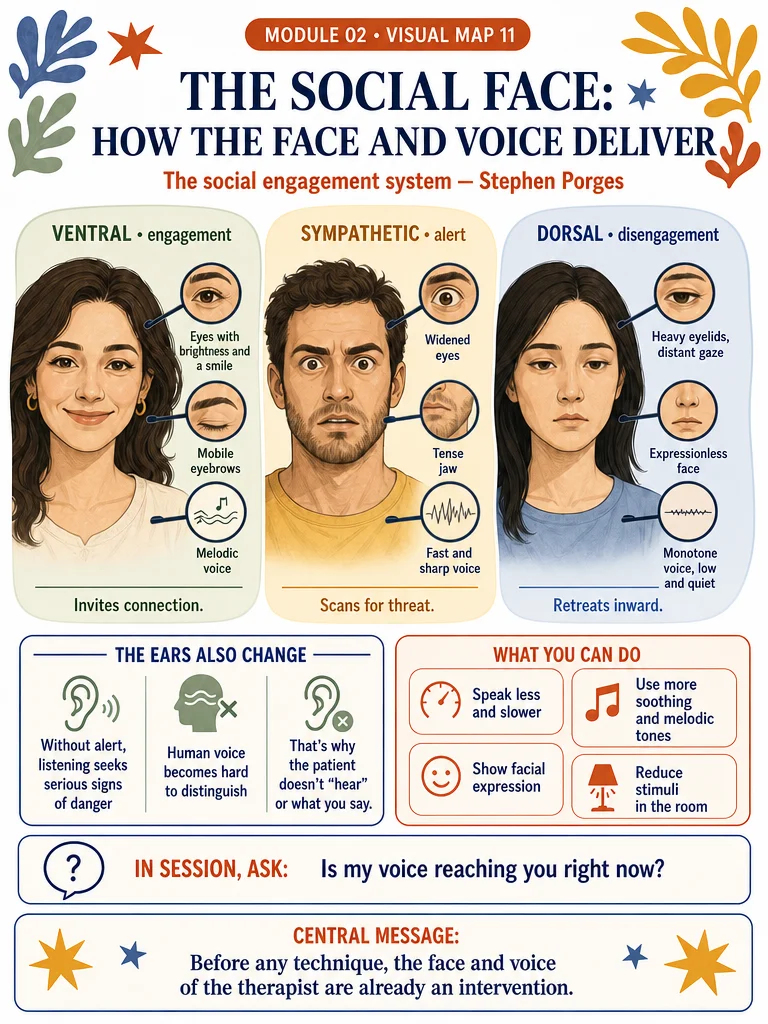
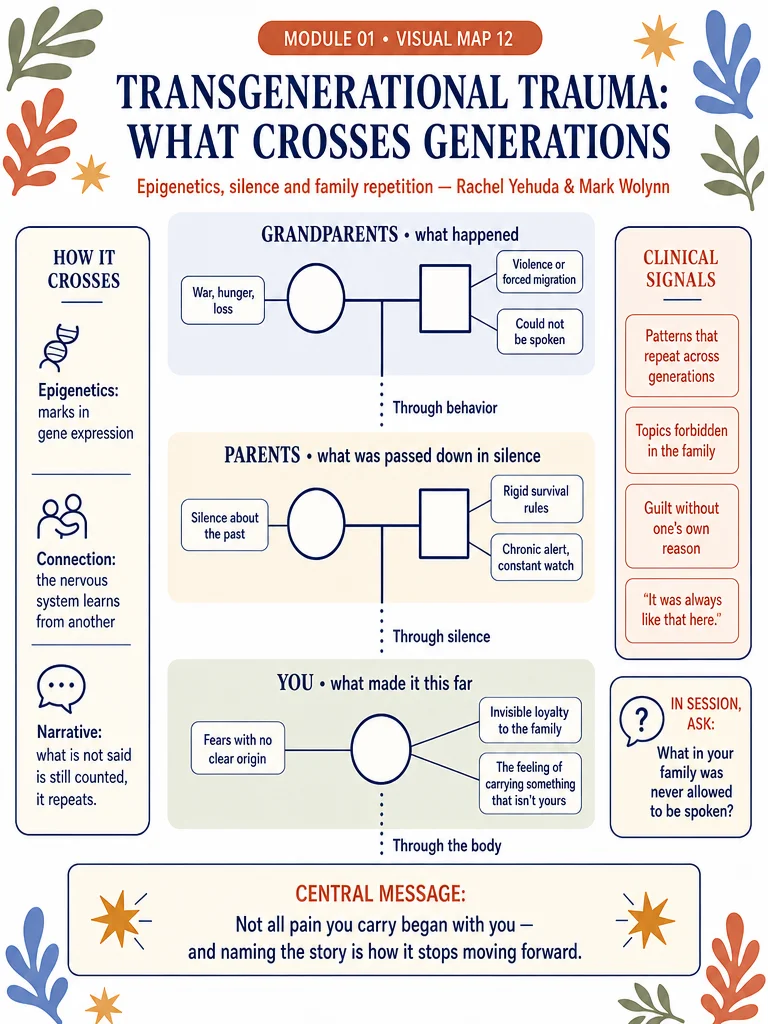
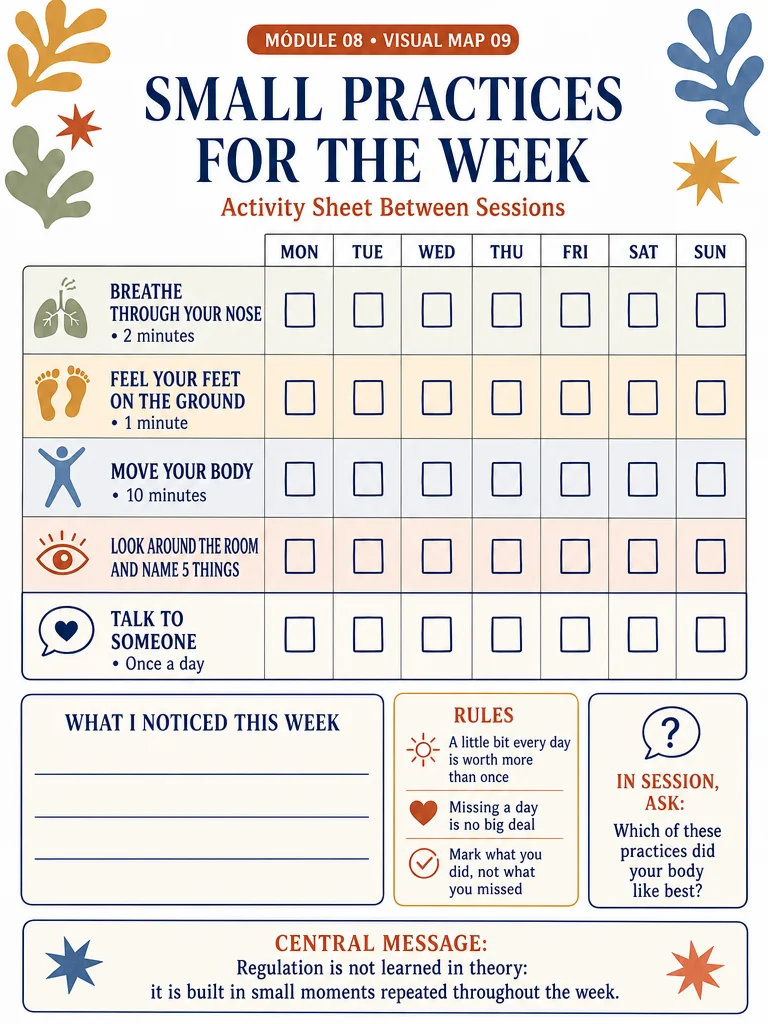
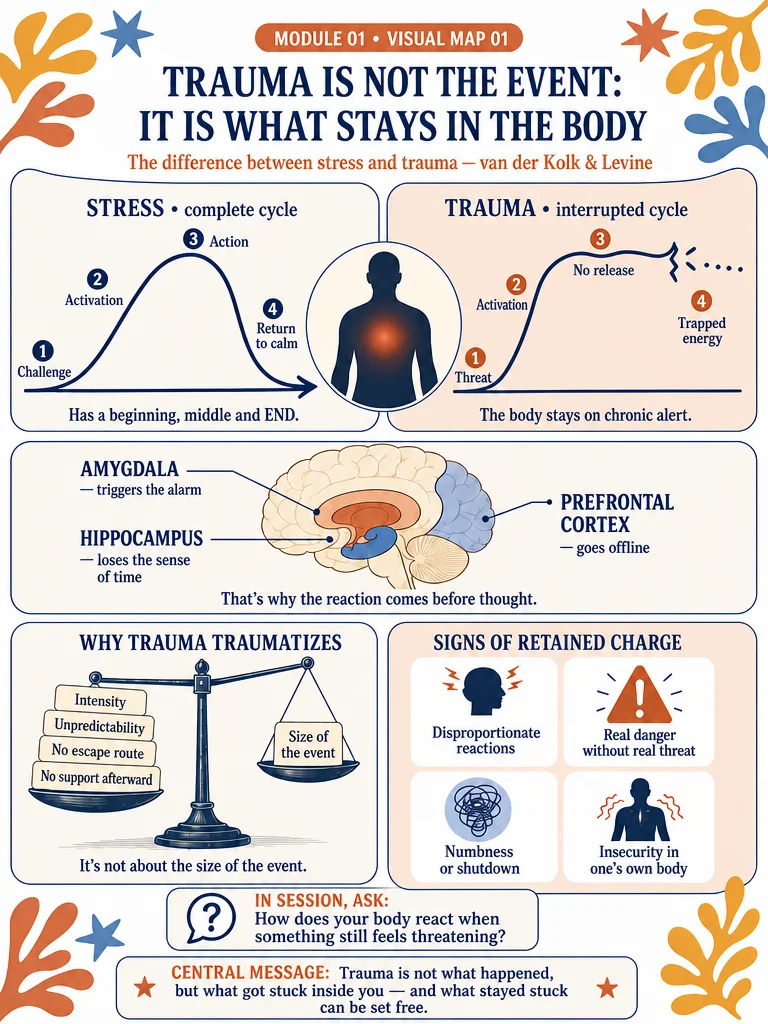
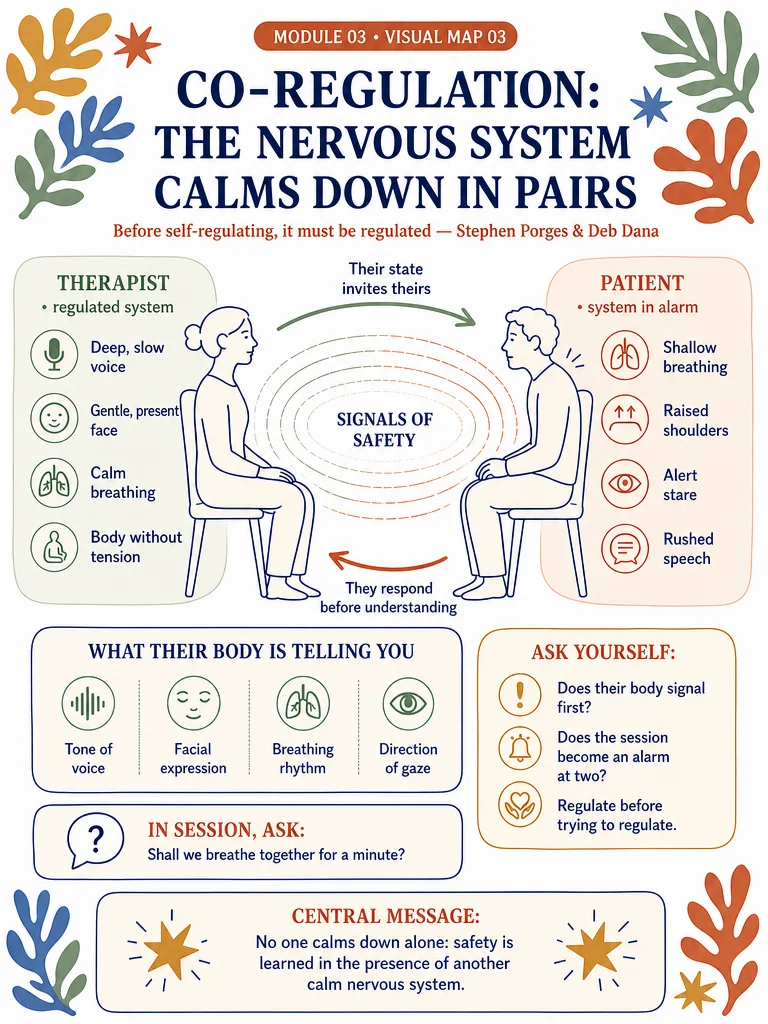

Important
This material is flexible. Use it for your clinical work or for your own personal growth.
If you're a therapist, counselor, psychologist, or mental health professional, these maps become the bridge between neurobiology and the way your clients talk. They work even with clients who can't name what they feel, who zone out mid-session, or who keep saying "I don't know why my body does this."
Every one of the 100 pages is designed to look beautiful and make sense at a glance.
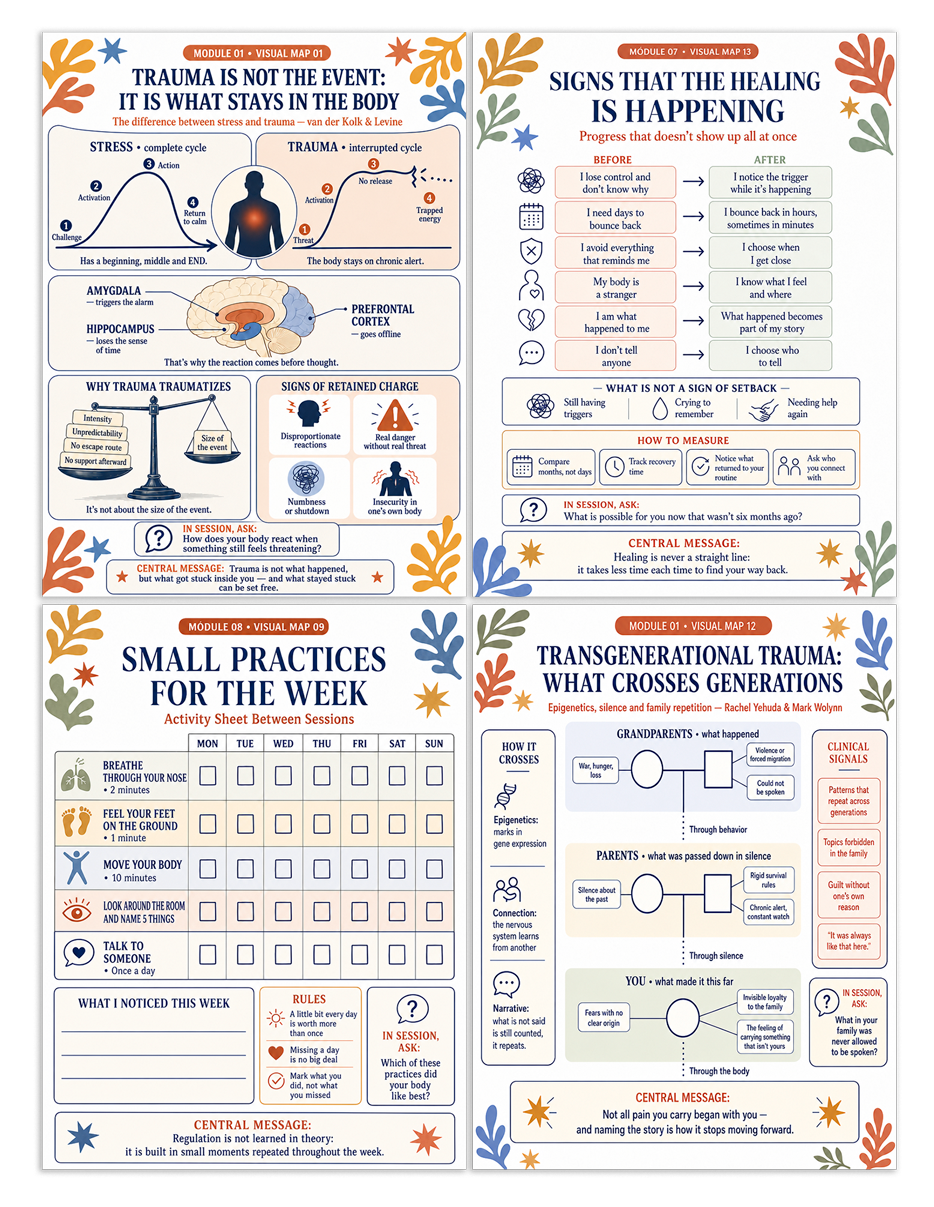
The 100 Maps, Organized into 8 Clinical Modules:
Trauma Foundations & Neurobiology
The biological difference between stress and trauma. A map of the brain structures involved when the system gets overloaded: Amygdala, Hippocampus, and Prefrontal Cortex.
- 01Stress, trauma, and complex trauma: the three curves
- 02What makes an event traumatic (it's not the event)
- 03The amygdala: the brain's smoke detector
- 04The hippocampus and memory without a timeline
- 05The prefrontal cortex: what goes offline when the body takes over
- 06The HPA axis: the cortisol cascade, step by step
- 07Big-T trauma and little-t trauma
- 08Acute, chronic, and developmental trauma
- 09Neuroception: the body detects danger before the mind does
- 10Trauma isn't what happened. It's what got stuck.
- 11Why two clients react differently to the same event
- 12The developmental window: when trauma happens matters
The Body & Polyvagal Theory
Practical diagrams of the Vagus Nerve and the Fight, Flight, Freeze, and Fawn responses. Illustrations to map your client's autonomic state.
- 13The three autonomic circuits in one image
- 14Ventral vagal: the state of safety and connection
- 15The sympathetic system: fight and flight from the inside
- 16Dorsal vagal: collapse, shutdown, and immobility
- 17The polyvagal ladder in clinical practice
- 18Fight: how to spot it in the body and in session
- 19Flight: somatic and behavioral signs
- 20Freeze: immobility with high arousal
- 21Fawn: the defense that goes unnoticed
- 22The vagus nerve: its pathway and the organs it innervates
- 23Vagal tone and the capacity to regulate
- 24Social cues of safety: face, voice, and middle ear
- 25How breathing changes in each autonomic state
- 26Physical symptoms by autonomic state: the map
- 27The hierarchy of defenses: the order the body tries them in
Window of Tolerance & Somatic Regulation
Visual tools to teach clients how to recognize hyperarousal and hypoarousal and use Grounding and Co-regulation techniques in session.
- 28The window of tolerance, drawn out
- 29Hyperarousal: what the client feels and what they show
- 30Hypoarousal: what the client feels and what they show
- 31Narrow window vs. wide window
- 32How to map your client's window in session
- 33Signs your client just left the window
- 34Grounding: 5 ways in
- 35Orienting to the room: the simplest exercise there is
- 36Co-regulation: the therapist's nervous system as a resource
- 37Self-regulation vs. co-regulation: when to use each
- 38Internal and external resources: the client's inventory
- 39Widening the window: what actually builds capacity
- 40Regulation before processing: why the order matters
Dissociation & Defense Mechanisms
The spectrum of structural dissociation, depersonalization, and derealization. Illustrations to psychoeducate clients about the mind's protective circuit breaker.
- 41The dissociation spectrum
- 42Dissociation as a circuit breaker: the breaker panel metaphor
- 43Depersonalization: being outside yourself
- 44Derealization: the world behind glass
- 45Dissociative amnesia and gaps in memory
- 46Structural dissociation: the parts that leave and the parts that stay
- 47Apparently normal part vs. emotional part
- 48Subtle signs of dissociation in session
- 49What to do when a client dissociates in front of you
- 50Dissociation, inattention, and drowsiness: telling them apart
Attachment & Relational Trauma
Secure, Anxious, Avoidant, and Disorganized styles. A map of developmental wounds and how they shape transference and relationships.
- 51The four attachment styles on one page
- 52Secure attachment: how it's built
- 53Anxious attachment: the alarm that won't shut off
- 54Avoidant attachment: self-reliance as a defense
- 55Disorganized attachment: when the source of safety is the threat
- 56Relational trauma vs. single-incident trauma
- 57Developmental wounds by age
- 58Emotional neglect: the trauma of what didn't happen
- 59Rupture and repair: the mechanism that builds safety
- 60The Still Face experiment: what it teaches about rupture
- 61Attachment and partner choice: the pattern that repeats
- 62Transference through the lens of attachment
- 63Somatic countertransference: what your body is feeling
- 64Intergenerational trauma: what gets passed down
- 65The therapeutic relationship as a corrective experience
Triggers & Implicit Memory
The anatomy of somatic flashbacks. How to explain to clients why their body reacts in the present as if the threat from the past were happening right now.
- 66Explicit memory vs. implicit memory
- 67Why the body remembers what the mind forgot
- 68Anatomy of a trigger: from stimulus to reaction
- 69Somatic flashback: when there's no image, only sensation
- 70Trauma's broken timeline
- 71Sensory triggers: smell, sound, touch, light
- 72Relational triggers: tone of voice, a look, an absence
- 73Anniversaries and dates: the body's calendar
- 74The cycle: trigger → reaction → shame → isolation
- 75Mapping your client's triggers: a visual worksheet
- 76Telling past from present: the “here and now”
- 77Why “just relax” doesn't work with a trigger
Paths to Integration & Somatic Healing
Visual guides to Pendulation, Titration, and Neurogenic Discharge (Peter Levine) to help the nervous system reorganize safely.
- 78The three phases of trauma treatment
- 79Titration: why we work one drop at a time
- 80Pendulation: moving between discomfort and resource
- 81The full cycle of activation and discharge
- 82Neurogenic discharge: trembling, heat, tears
- 83Resourcing before accessing: building the foundation
- 84Tracking sensations in session
- 85Pacing the processing: signs it's moving too fast
- 86Incomplete defensive responses: finishing what got cut short
- 87Integration: what changes when trauma becomes a memory
- 88Post-traumatic growth: what it is and what it isn't
- 89A setback isn't starting over: the spiral of recovery
- 90Signs the nervous system is reorganizing
Quick Psychoeducation Guide for Sessions
One-page handouts to show clients right in session, so they quickly understand what's going on with their somatic and physical symptoms.
- 91“It's not you. It's your nervous system.”
- 92Why my body reacts like this: the 60-second explanation
- 93What's happening to me right now: a crisis handout
- 94Insomnia, startle response, and being on high alert
- 95Chronic pain and trauma: the connection in one image
- 96Digestive symptoms and the nervous system
- 97Why I freeze instead of reacting
- 98Why I people-please
- 99What to expect from therapy
- 100My regulation plan: a take-home handout


"I printed the maps, and they became the most requested resource in my practice.
"Beautiful material, straight to the point, and grounded in theory I trust.
3 Exclusive Bonuses to Support Your Sessions:
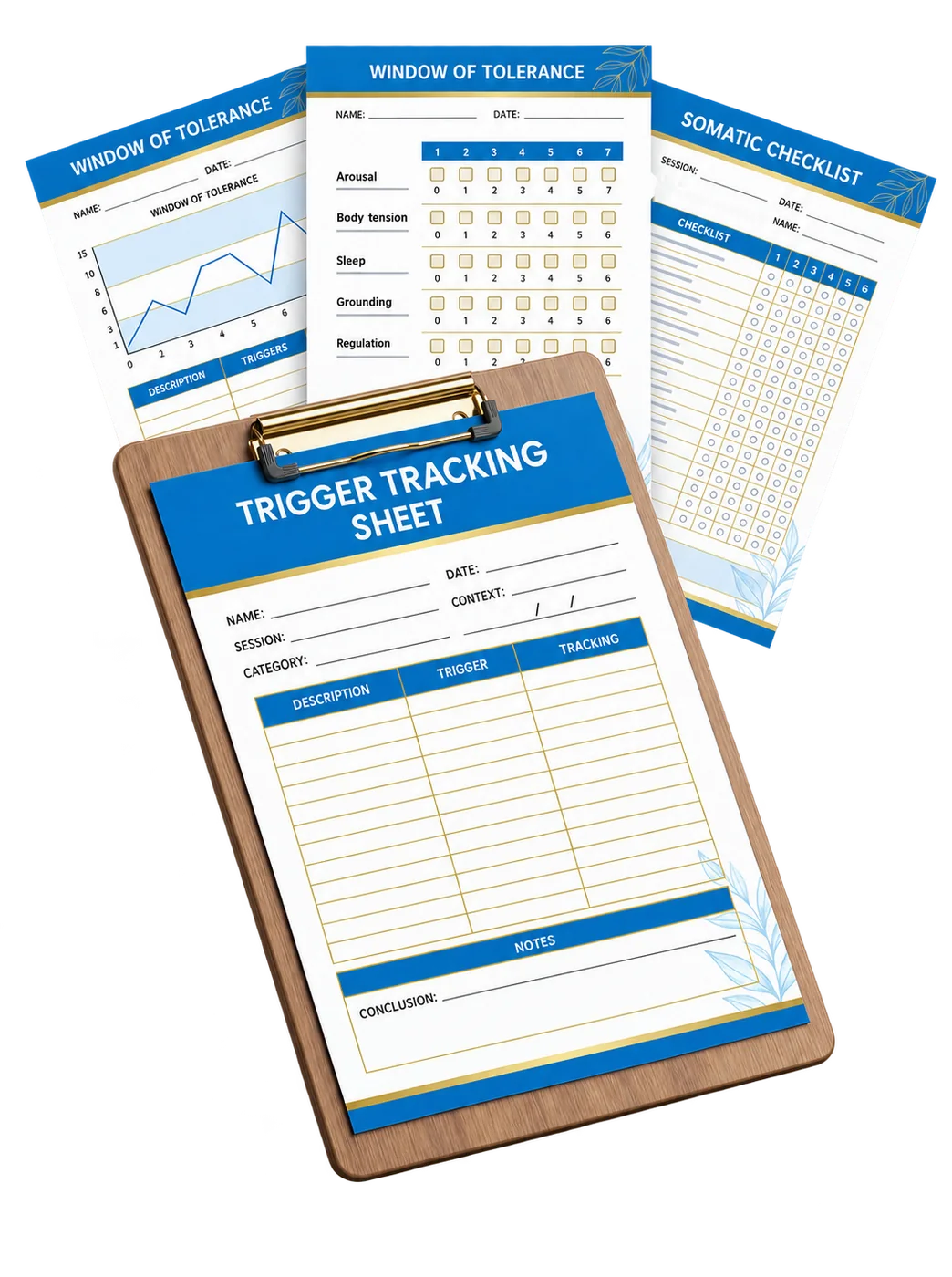
Trigger Tracking Sheet
Hand it to your client and see their week before the session even starts. You walk in knowing what set them off, when it happened, and how their body reacted.

Psychopathology Made Simple: 30 Visual Maps
Anxiety, depression, PTSD, BPD, and more, each condition on a single page. Walk into your next session knowing exactly what you're dealing with, without opening the DSM.
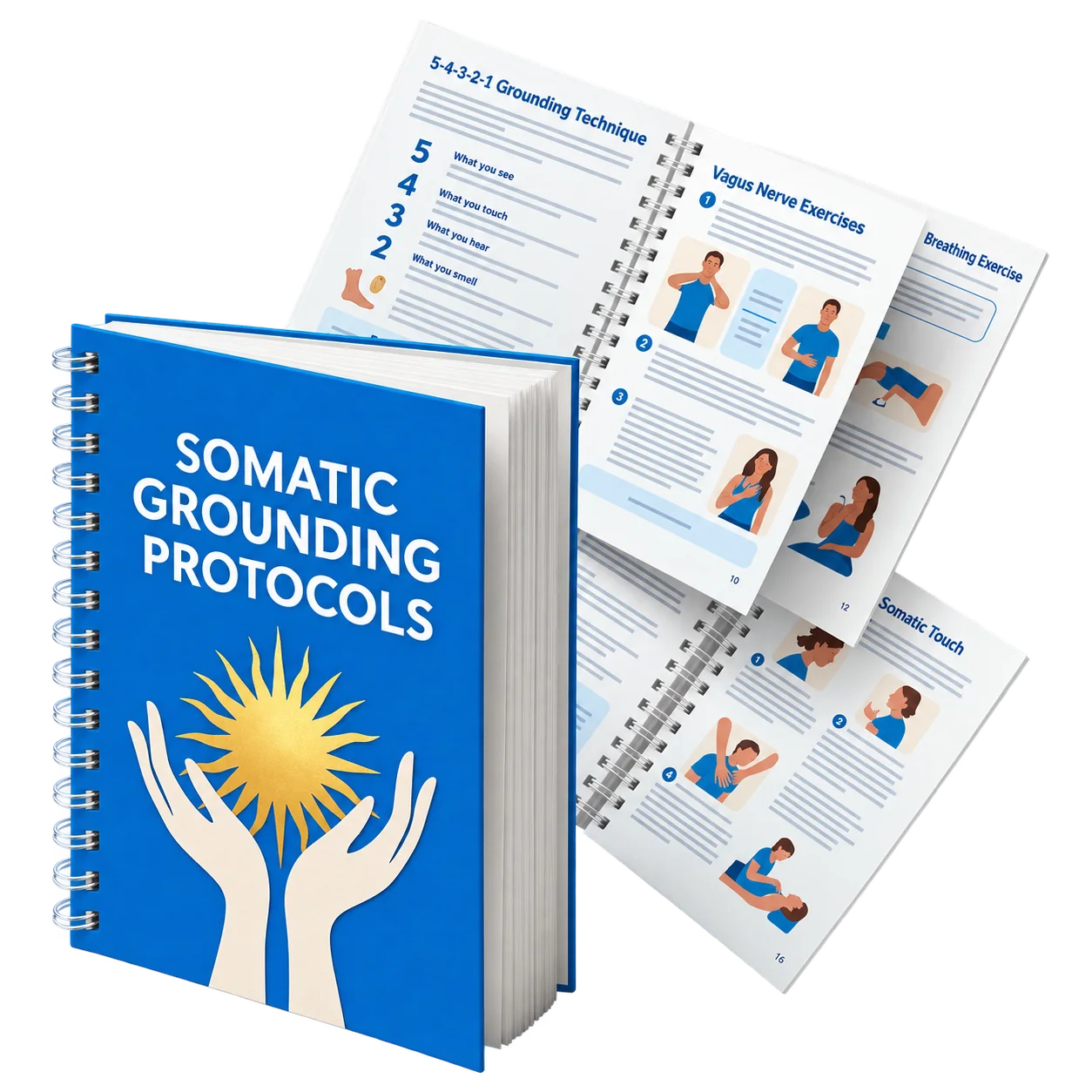
Regulation & Crisis Response Protocols
A client panicking, dissociating, or frozen right in front of you? Keep the step-by-step on hand to bring them back safely, in minutes.
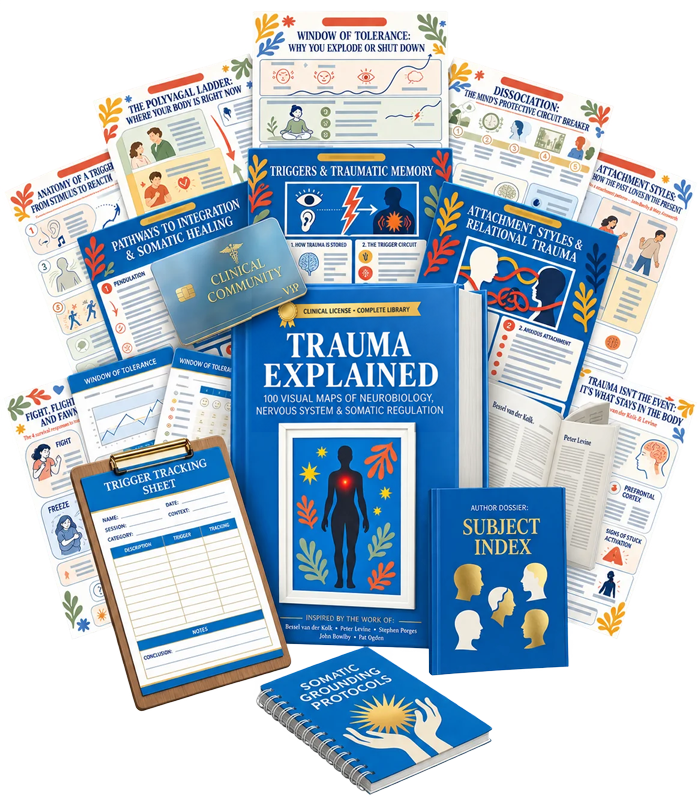
- ✓100 Visual Maps Based on Van der Kolk, Levine, and Porges
- ✓Authorized Clinical Use and Printing License
- 🎁Bonus #1 Clinical Trigger Tracking Sheet
- 🎁Bonus #2 Psychopathology Made Simple: 30 Visual Maps
- 🎁Bonus #3 Regulation & Crisis Response Protocols
One-time payment · Instant lifetime access · High-definition digital PDF files
 Zero Risk to Your Practice
7-Day No-Questions-Asked Guarantee
Put the maps to work in your sessions for a full week. If you don't feel the library made your explanations easier, got your clients more engaged, or raised the value clients see in your sessions, ask for a refund. We'll return 100% of your money, no hoops to jump through.
Complete your secure license purchase
Get your download link by email and WhatsApp
Download the library and all 3 bonuses in high resolution
Use them in person or in telehealth sessions
Questions Clinicians Ask Us
Yes! When you get the library, you receive the Authorized Clinical Use License. You can print the handouts, send them to clients as homework, or use them in your presentations and sessions.
Delivery is instant and automatic. As soon as your payment goes through, you'll get direct download links by email and WhatsApp.
All 100 visual maps and the bonuses come as ultra-high-resolution PDFs (300 DPI), ready for your tablet or laptop screen and sharp enough for professional printing.
Absolutely. The library covers the neurobiology and somatic physiology of trauma, so it fits right into CBT, Somatic Experiencing, EMDR, Schema Therapy, Psychoanalysis, and Integrative Medicine.
Download the whole library and test it for 7 days. If for any reason you feel it doesn't add value to your practice, just send us a message and we'll refund 100% of your payment.